
Swanson 4½-, 7- and 12-inch speed squares
Compare Swanson’s 4½-, 7- and 12-inch squares by the work they can span and the space they take up.
Three squares on a small bench
Scroll sideways to compare.
| Compare | 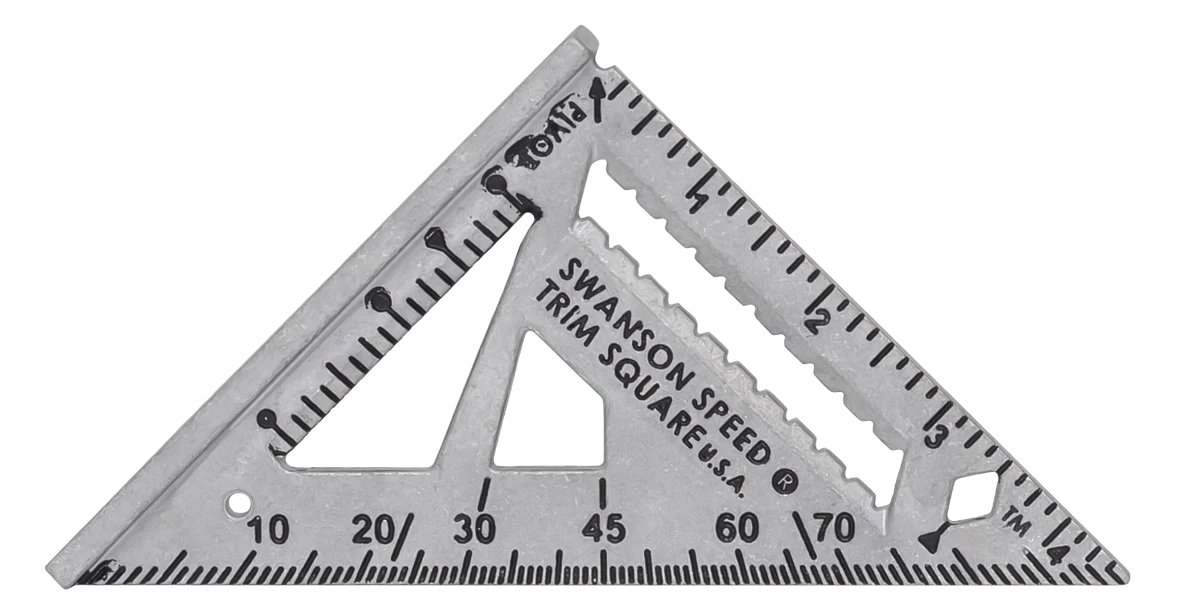 Swanson Trim Speed Square | 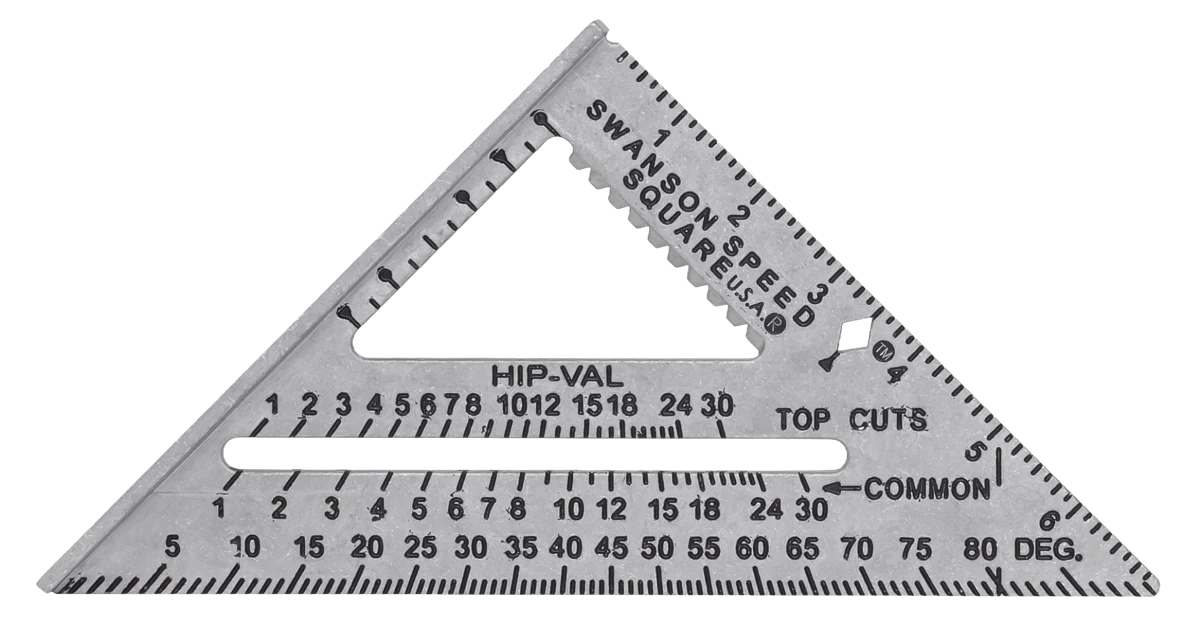 Swanson 7-inch Speed Square | 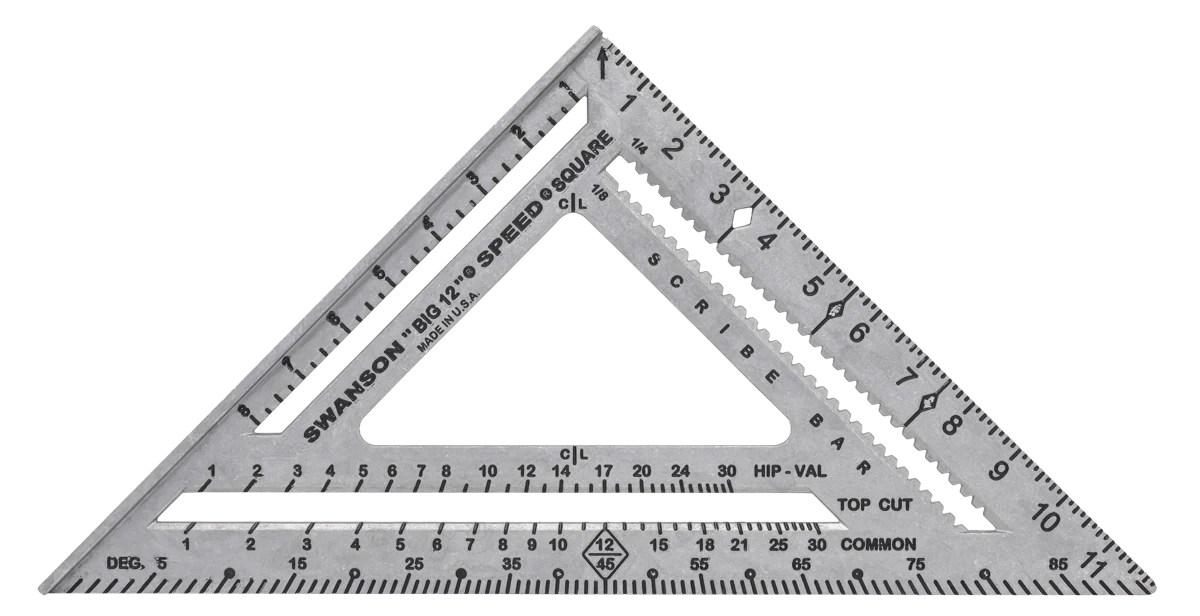 Swanson Big 12 Speed Square |
|---|---|---|---|
| Nominal size | 4½ in | 7 in | 12 in |
| Format | Trim square | Standard Speed Square | Big 12 with layout bar |
| Worth making room for when… | Most work is narrow trim or small parts | A general fixed square suits the bench | You regularly mark wider stock |
Make a list of the lines you repeat
List the widths and positions of the marks you make most often. A short trim piece and a broad board ask for different working spans even when they belong to the same project. Compare the square with the line, not with the project’s overall size.
Also consider the space around the piece. The largest square needs room to sit with its heel correctly against the edge. If the small square handles most work and a larger one solves a distinct occasional task, that is a clearer reason to own both than a desire for a complete set.
- Check the required span on typical pieces.
- Keep the heel contact free of debris.
- Store the square where its reference edges will not become a catch-all shelf.
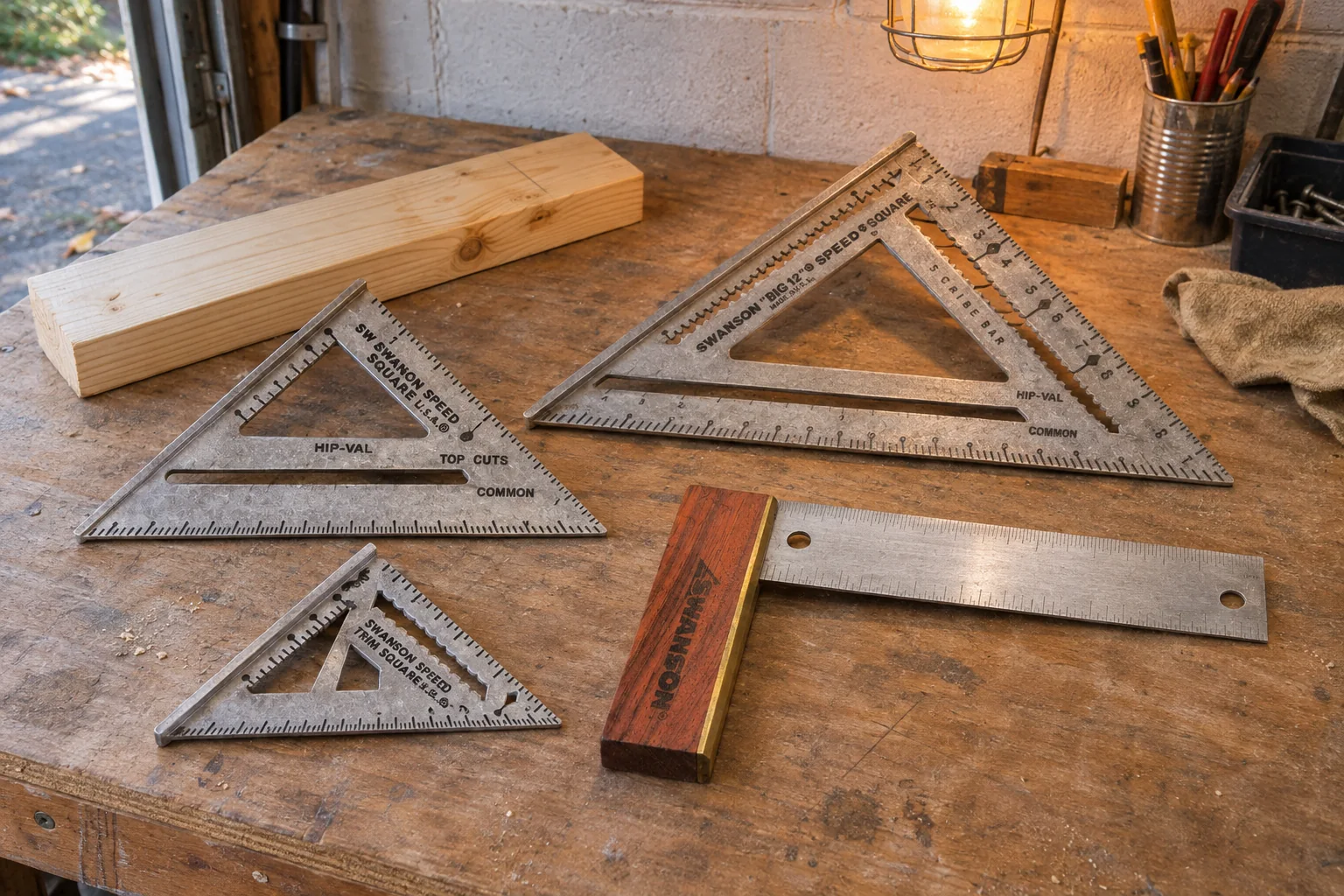
The largest one is not always the easiest one
A square needs enough blade to carry the line you want. Anything beyond that can be awkward on a crowded bench. A large triangular body can cover layout marks, push small parts out of position or simply have nowhere flat to rest while you hold a narrow strip.
Swanson’s three sizes give you a useful way to think about the trade. The 4½-inch trim square is a small reference for narrow work. The seven-inch original is the middle ground. The Big 12 reaches farther across the stock, with a larger body to accommodate.
Measure the line, not the project
A large cabinet can involve lots of tiny layout operations. You do not need a twelve-inch square just because the finished object is large. Look at the width of the individual part and at where its clean reference edge will be.
Conversely, a small shelf may need a line across a board wider than a trim square can span. Extending a short line with a separate straightedge is possible, but it adds another placement to get right. If that is the everyday job, a longer square earns the extra bench space.
The fence needs somewhere clean to sit
All three rely on placing their working reference against the material. A small chip trapped at the edge can move the whole line. Clear dust and inspect for a rounded corner or damaged edge before blaming the square.
Keep the same reference face and edge as you work around a part. Alternating between rough edges can produce lines that disagree even when each individual placement seems reasonable. Mark the chosen reference once and make it the starting point for later measurements.
A sensible first choice
For general small-bench use, the seven-inch size is the straightforward middle option. Choose the trim square instead when narrow parts dominate, or the Big 12 when longer cross-board lines are frequent enough that changing tools becomes a nuisance.
The Big 12 package includes a separate layout bar and Blue Book; S0101 also includes the Blue Book. Keep those package differences in mind when comparing retailer listings. A bare tool, a bulk version and a retail kit may share the same family name without containing the same pieces.
Sources
- Swanson Trim Speed Square (S0145)Checked November 15, 2026
- Swanson 7-inch Speed Square (S0101)Checked November 15, 2026
- Swanson Big 12 Speed Square (S0107)Checked November 15, 2026