
How to read a fractional-inch ruler
A practical way to read eighths, sixteenths, thirty-seconds and sixty-fourths without pretending every job needs the finest scale.
Read the graduations before buying
Scroll sideways to compare.
| Compare | 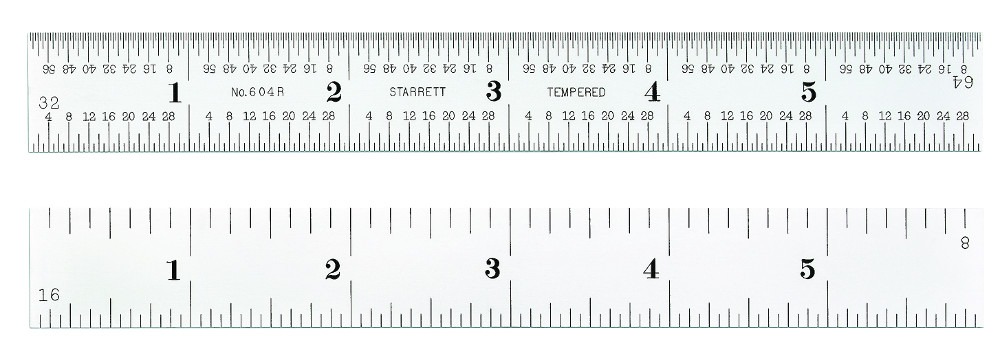 Starrett 6-inch 4R steel rule | 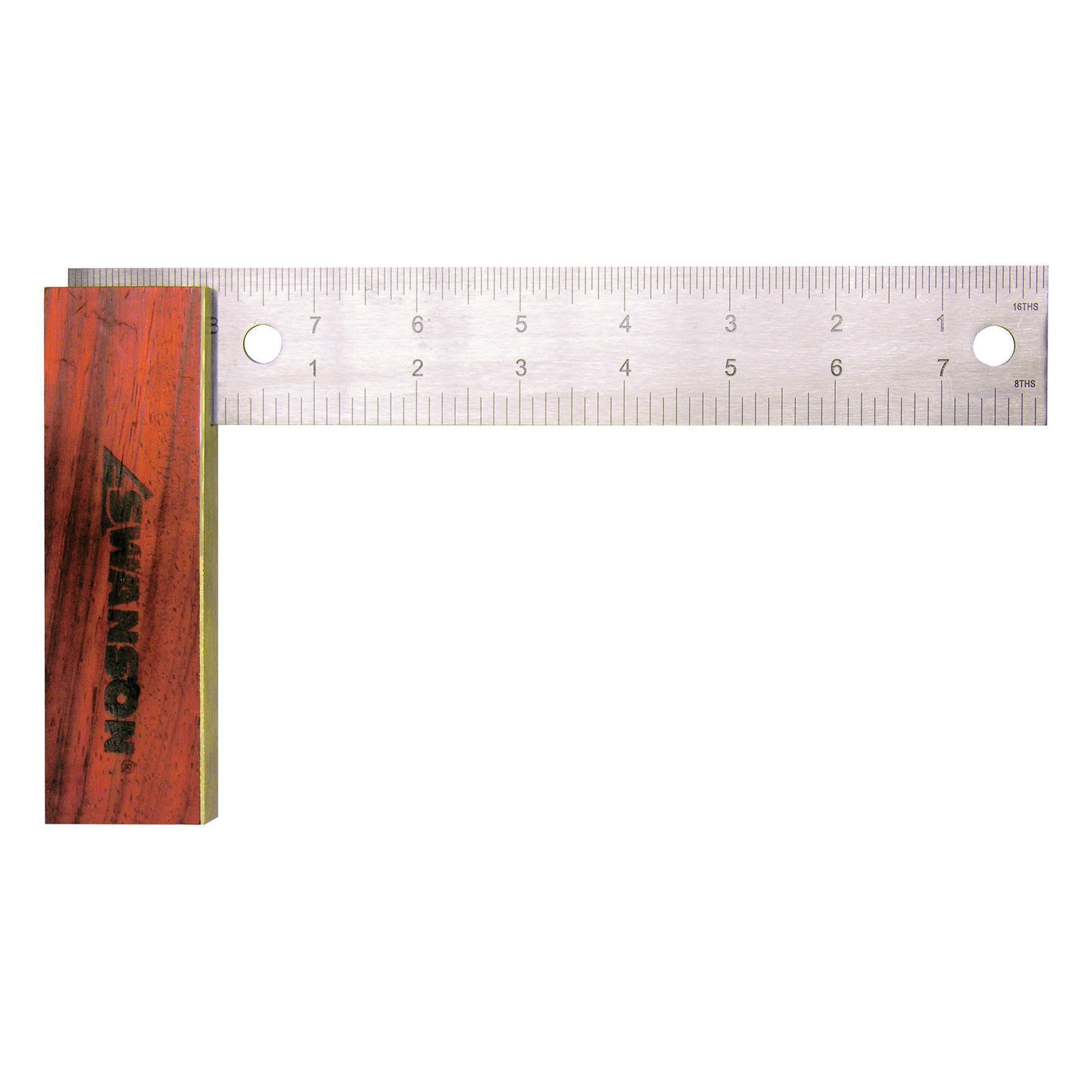 Swanson 8-inch Try Square | 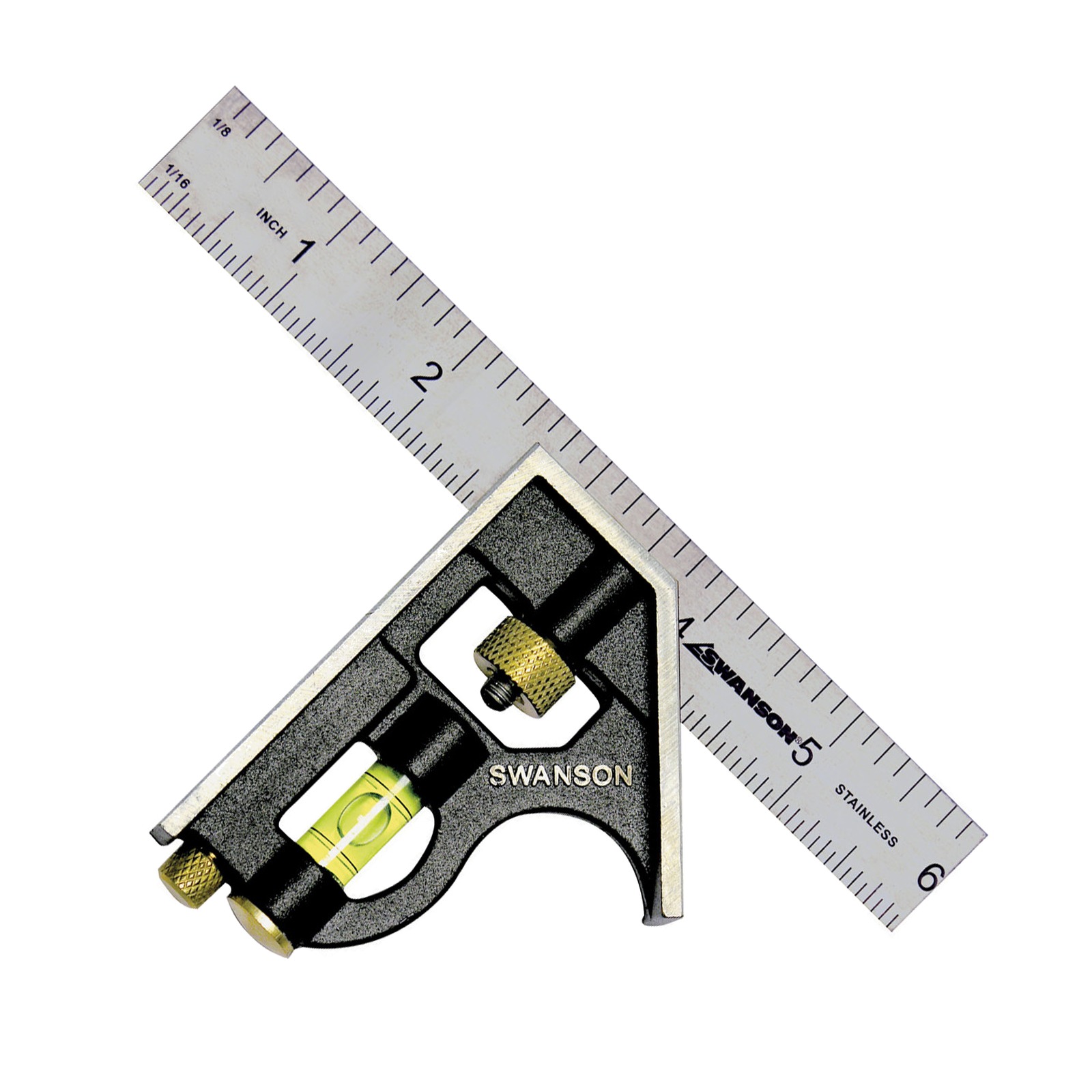 Swanson 6-inch Combination Square |
|---|---|---|---|
| Tool | 6 in steel rule | 8 in try square | 6 in combination square |
| Published scale / reference | 8ths, 16ths, 32nds, 64ths | 1/8 in and 1/16 in | Sliding rule and fixed head faces |
| Useful job | Short fractional measurements | Right-angle layout with a rule | Transferring a repeated offset |
Pick the interval before counting marks
Find the inch marks first, then identify the subdivision printed on the edge you are using. Counting a tiny mark without knowing whether the interval is a sixteenth or a thirty-second is an easy way to carry the wrong number to the next piece.
The Starrett 4R rule offers several graduations, but the task determines which is useful. Fine divisions cannot compensate for a poorly seated rule, an angled reading or an imprecise line. When parts need to match, consider transferring one verified setting instead of making several separate readings.
- Identify the scale edge and interval.
- Read straight down at the reference mark.
- Keep one checked setting for repeated matching parts where practical.
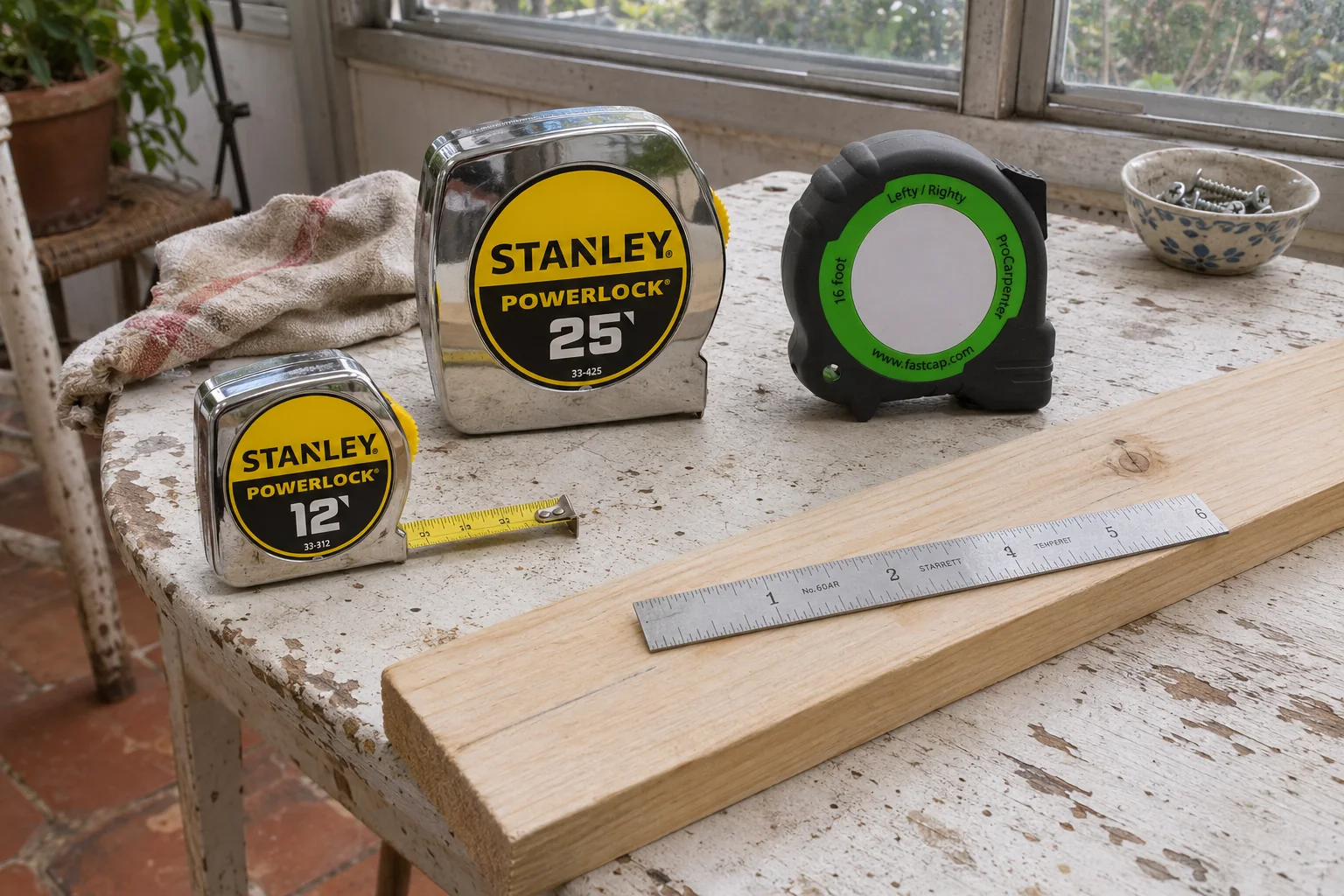
Read the interval, then count it
First identify what the smallest division on the chosen edge represents. If an inch is divided into sixteen equal spaces, each space is one-sixteenth. Count spaces from the last whole-inch mark, then reduce the fraction if that makes it easier to recognise. Eight sixteenths is one-half; twelve sixteenths is three-quarters.
Do not infer the scale from the number of crowded lines alone. A rule can put different graduations on different edges or sides. Starrett’s 4R pattern includes eighths, sixteenths, thirty-seconds and sixty-fourths, so turning the rule can change what you are reading.
Common fractions worth recognising
The quarter marks are useful anchors. On a sixteenth scale, one-quarter is four divisions, one-half is eight, and three-quarters is twelve. The eighths fall halfway between those quarters. Once those positions are familiar, most everyday readings stop feeling like a counting exercise.
For decimal conversion, divide the numerator by the denominator. Three-eighths is 3 ÷ 8 = 0.375. For millimetres, multiply inches by 25.4; three-eighths of an inch is therefore 9.525 mm. Keep the extra digits only when the job actually calls for them.
Fine marks do not guarantee fine work
A sixty-fourth scale lets you read smaller increments than an eighth scale. It does not establish that the part, pencil line, tool position or cutting process is accurate to a sixty-fourth. Choose a sensible working tolerance for the joint rather than the smallest number the rule can display.
Look down at the graduation instead of reading it from a steep angle. Keep the rule’s zero aligned with the intended reference, and decide which edge of the pencil line represents your dimension. Those details can outweigh the difference between two graduation patterns.
Sometimes the best reading is no second reading
If several parts need the same offset, set a combination-square head once and transfer it. That avoids measuring each part from scratch. Check the initial setting carefully and revisit it if the lock is knocked or adjusted.
Use the fixed try square when the task is a ninety-degree line and a simple rule reference. Use the movable head when repeatability is the main need. The tool choice follows the operation, not the finest printed graduation.
Sources
- Starrett 6-inch 4R steel rule (C604R-6)Checked November 15, 2026
- Swanson 8-inch Try Square (TS152)Checked November 15, 2026
- Swanson 6-inch Combination Square (TC130)Checked November 15, 2026