
Carpenter pencils and mechanical marking pencils compared
Wooden carpenter pencils, replaceable tips and two lead sizes: choose for the surface and the kind of mark.
Choose a line, then a pencil
Scroll sideways to compare.
| Compare | 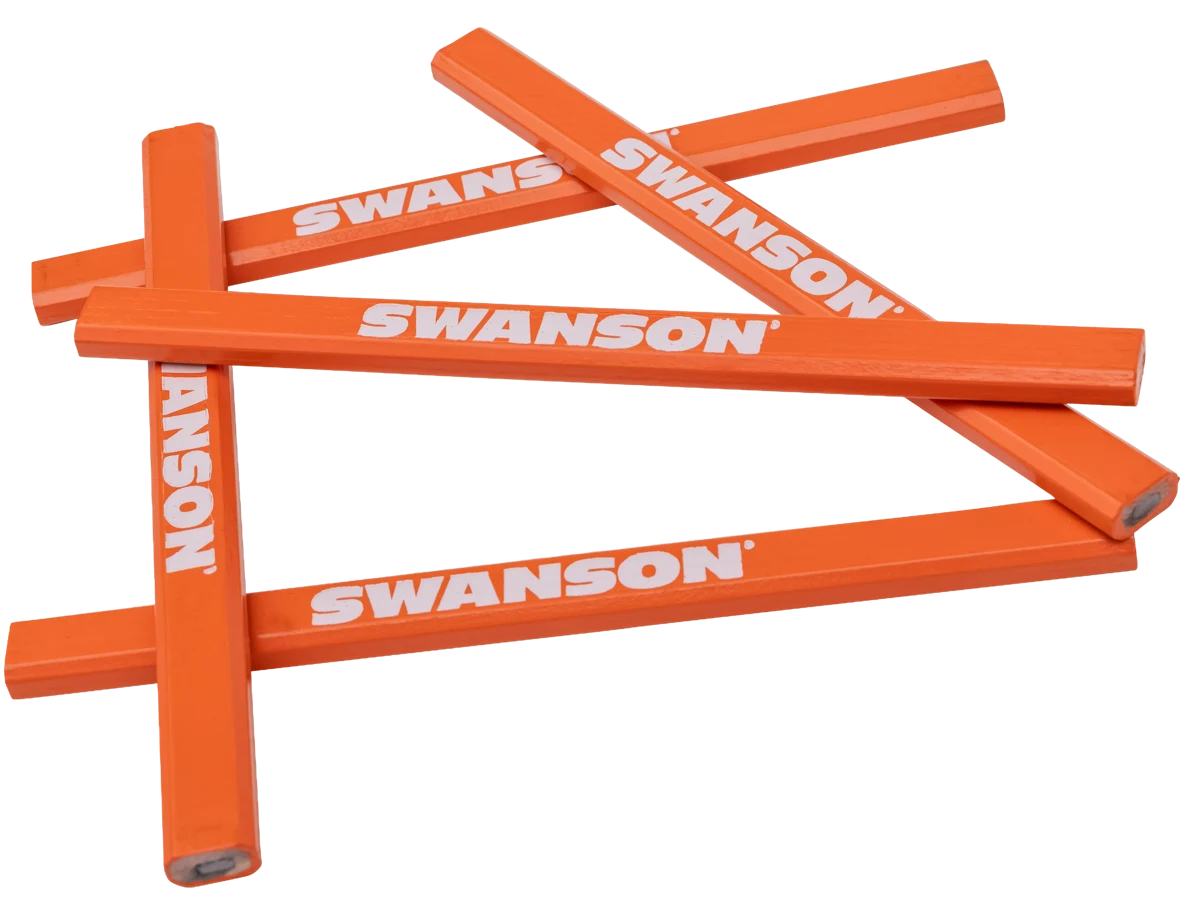 Swanson carpenter pencils | 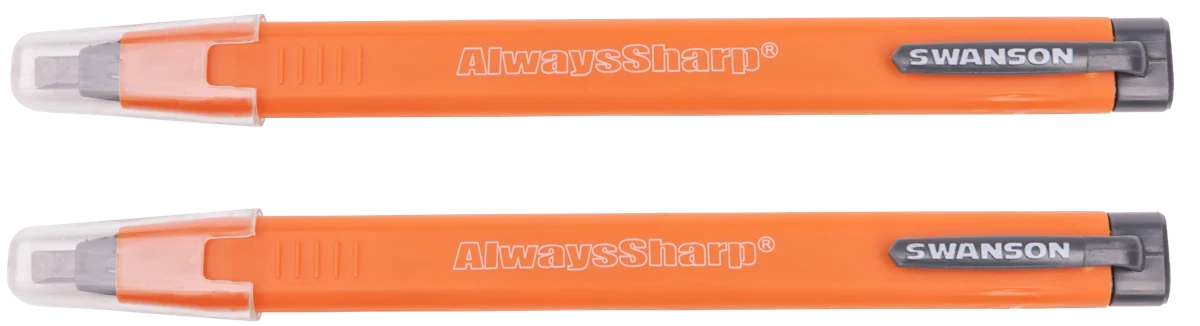 Swanson AlwaysSharp pencils | 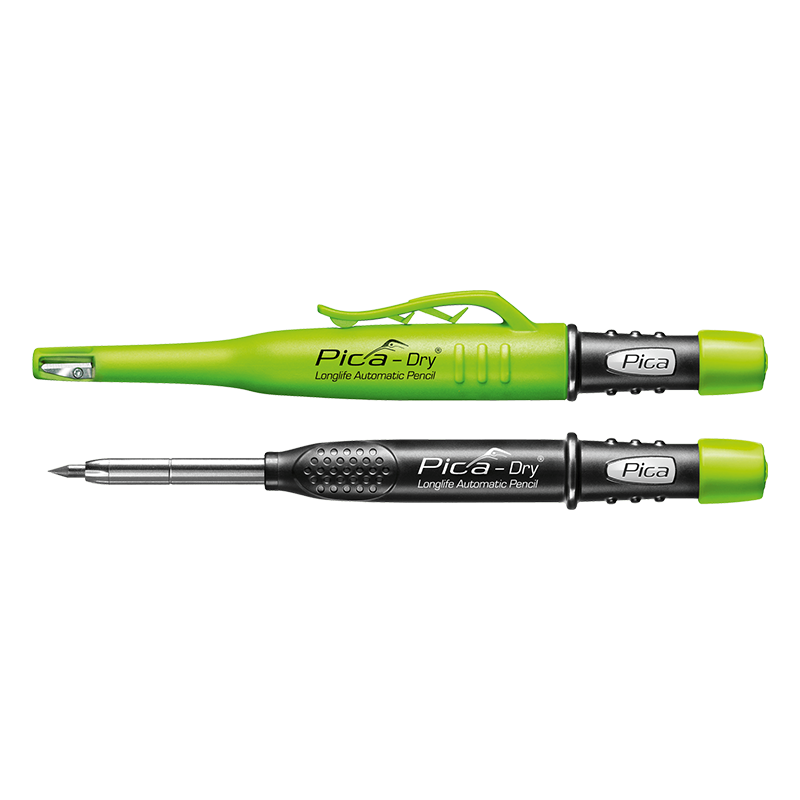 Pica Dry | 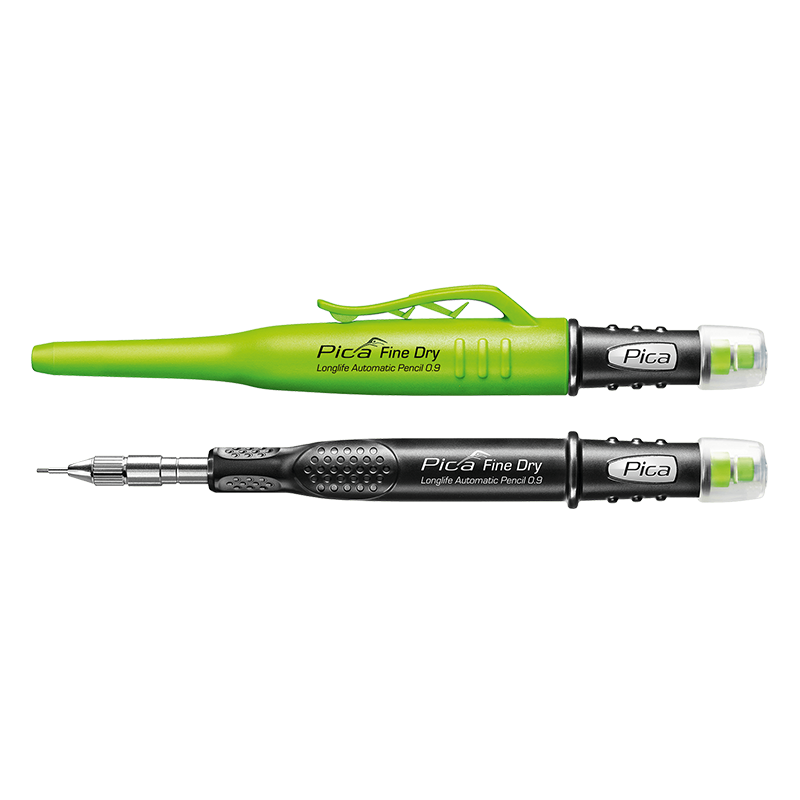 Pica Fine Dry |
|---|---|---|---|---|
| Tip system | Sharpenable wood pencil | Replaceable graphite tips | 2.8 mm automatic pencil | 0.9 mm automatic pencil |
| Refill / pack | Five pencils | Two pencils; spare cartridges | Dry refill family | Fine Dry refill family |
| Useful distinction | Shape the tip for the mark | No conventional sharpening | Thicker lead with holder sharpener | Fine lines and integrated eraser |
Test the mark on the actual surface
A useful pencil line must be visible enough to follow and appropriate for the next operation. Try the point on an offcut of the project material, then check how the mark removes. A pencil that looks tidy on pale smooth wood may be a different choice on another surface.
Keep point maintenance in the decision. Wooden pencils need sharpening, AlwaysSharp uses cartridges, and the two Pica models use different lead diameters. Choose the system you can keep supplied and identifiable, then decide which side of the mark the work will follow.
- Check visibility and removal before marking the finished face.
- Choose a point appropriate to the job.
- Keep refill systems labeled separately.
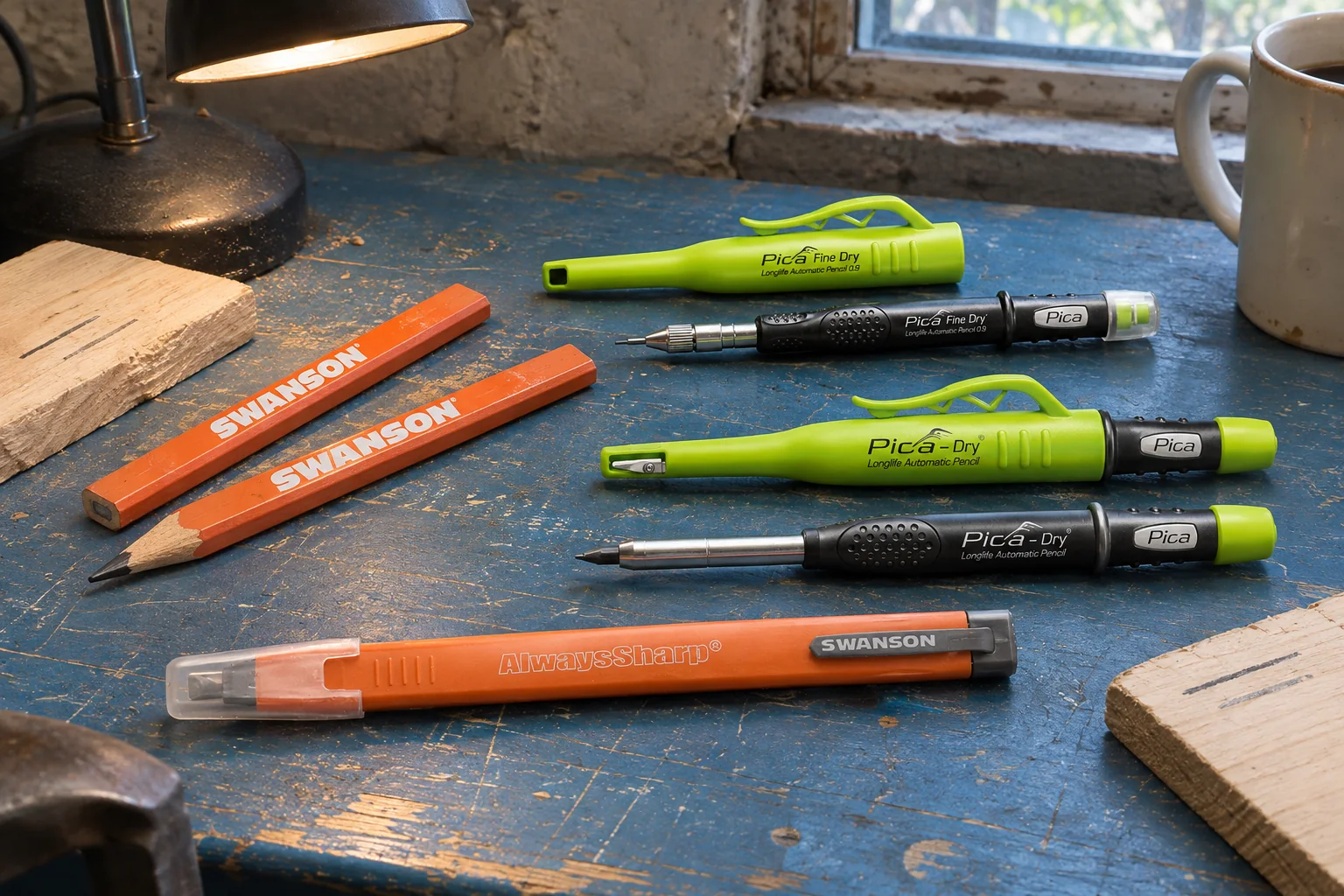
Choose the line before choosing the pencil
A bold mark on a rough board and a fine mark beside a hinge are different jobs. The first needs to stay visible through texture. The second needs a line whose position is easy to distinguish. A pencil can be very good at one and awkward at the other.
Think about how the mark will be used. A rough length mark that will be trimmed later does not demand the same line as a final shoulder or reveal. The smaller the tolerance in the work, the more attention the edge of the line deserves.
Wood and replaceable tips
A wooden carpenter pencil gives you control over the shape of the point. A broad tip can be useful on coarse stock; a narrower edge gives a more precise reference. That shape changes as the graphite wears, so refresh it before switching to fine layout.
Swanson’s CP216 uses replacement cartridges instead. The body keeps its size, and changing a worn tip avoids sharpening. It is a different refill system from a loose-lead mechanical pencil. Keep the matching cartridges with it rather than assuming any graphite refill will fit.
The two Pica pencils are not interchangeable
Pica Dry uses 2.8 mm leads and includes a sharpener in its holder. Fine Dry uses 0.9 mm leads and has an eraser. The thicker lead can be shaped; the fine lead starts with a smaller diameter. Neither diameter alone promises a particular line width on every surface.
Pica offers different lead formulations. Match both the pencil family and the marking surface when ordering refills. A box labelled “Pica” is not enough information. Keep fine lead exposure short so that a long unsupported tip is not taking sideways pressure.
Try removal on a scrap
A visible mark is only half the job when the face will remain visible. Test the chosen pencil and removal method on a scrap of the same material, especially before using coloured leads or marking a finished surface.
Mark from one reference edge and choose which edge of the line represents the dimension. A fine pencil cannot rescue inconsistent layout habits. For matching parts, the same marking method used consistently is often more useful than changing to a supposedly more precise pencil halfway through.
Sources
- Swanson carpenter pencils (CP700)Checked November 15, 2026
- Swanson AlwaysSharp pencils (CP216)Checked November 15, 2026
- Pica Dry (3030)Checked November 15, 2026
- Pica Fine Dry (7070)Checked November 15, 2026