
Clamp opening and throat depth compared
Jaw opening and throat depth solve different problems. Here is what to measure before choosing a six- or twelve-inch clamp.
Opening and reach, side by side
Scroll sideways to compare.
| Compare | 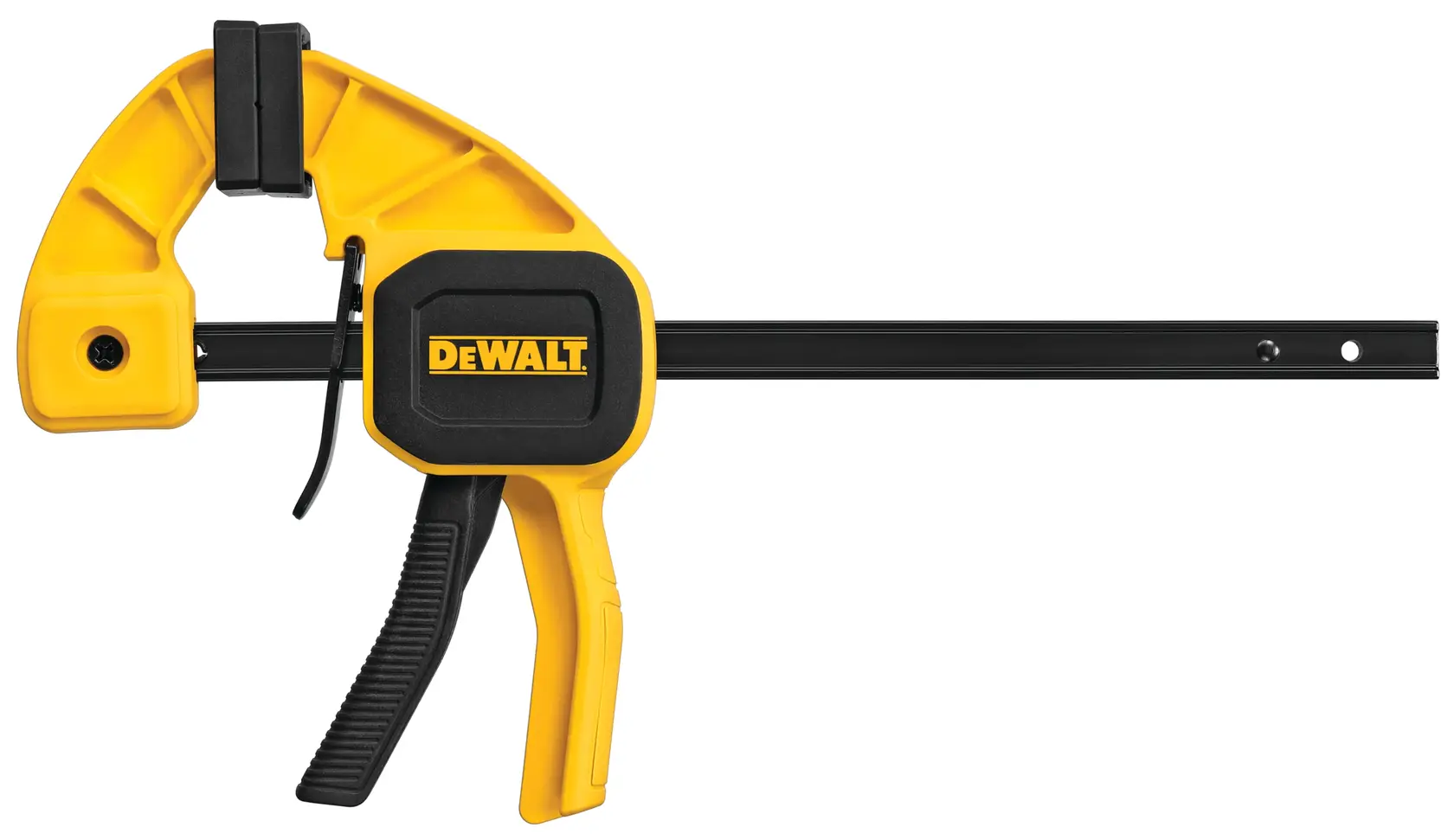 DEWALT 6-inch Medium Trigger Clamp | 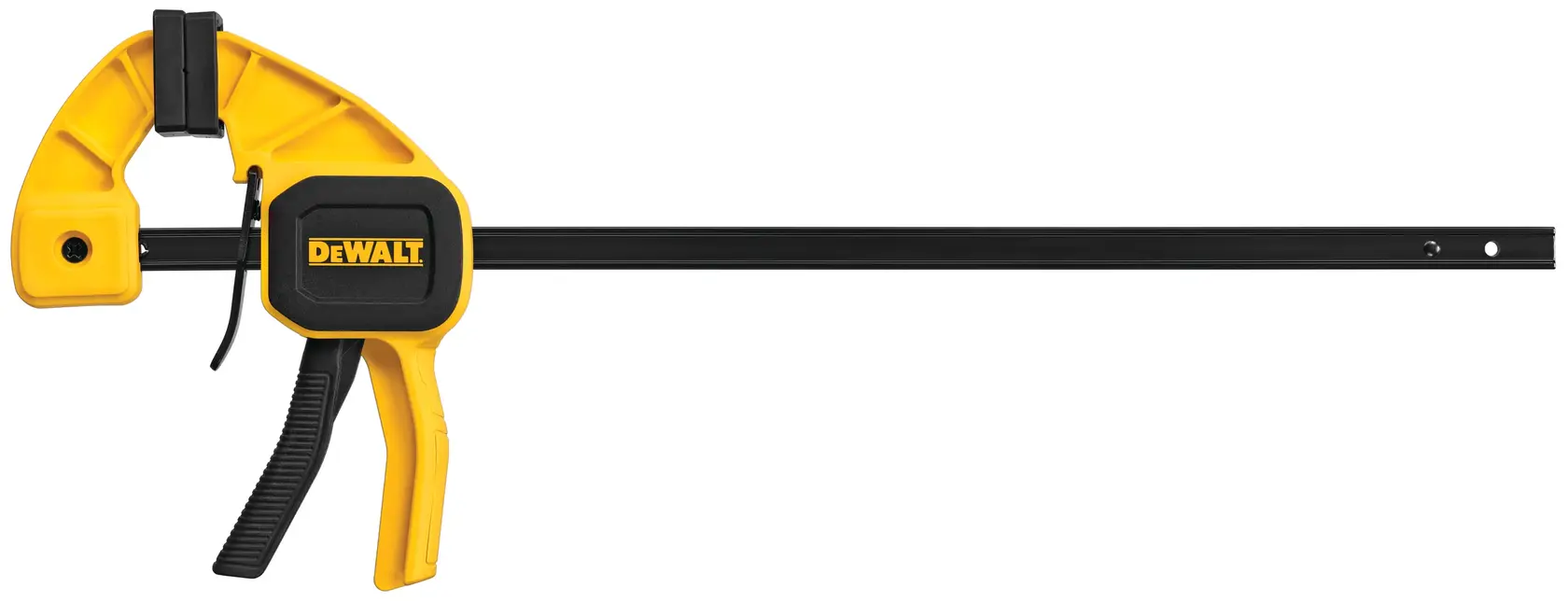 DEWALT 12-inch Medium Trigger Clamp | 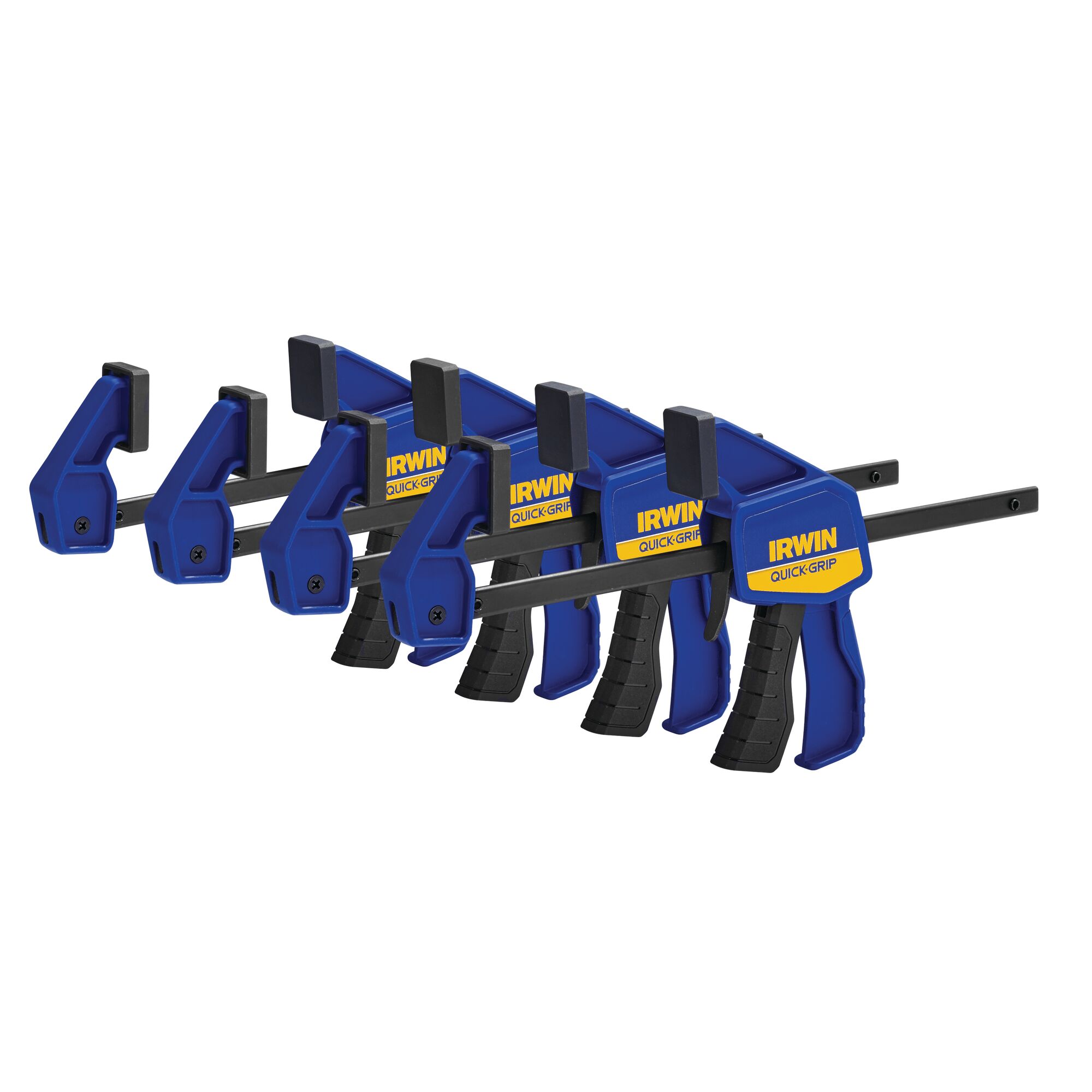 IRWIN 6-inch Mini clamps, four-pack | 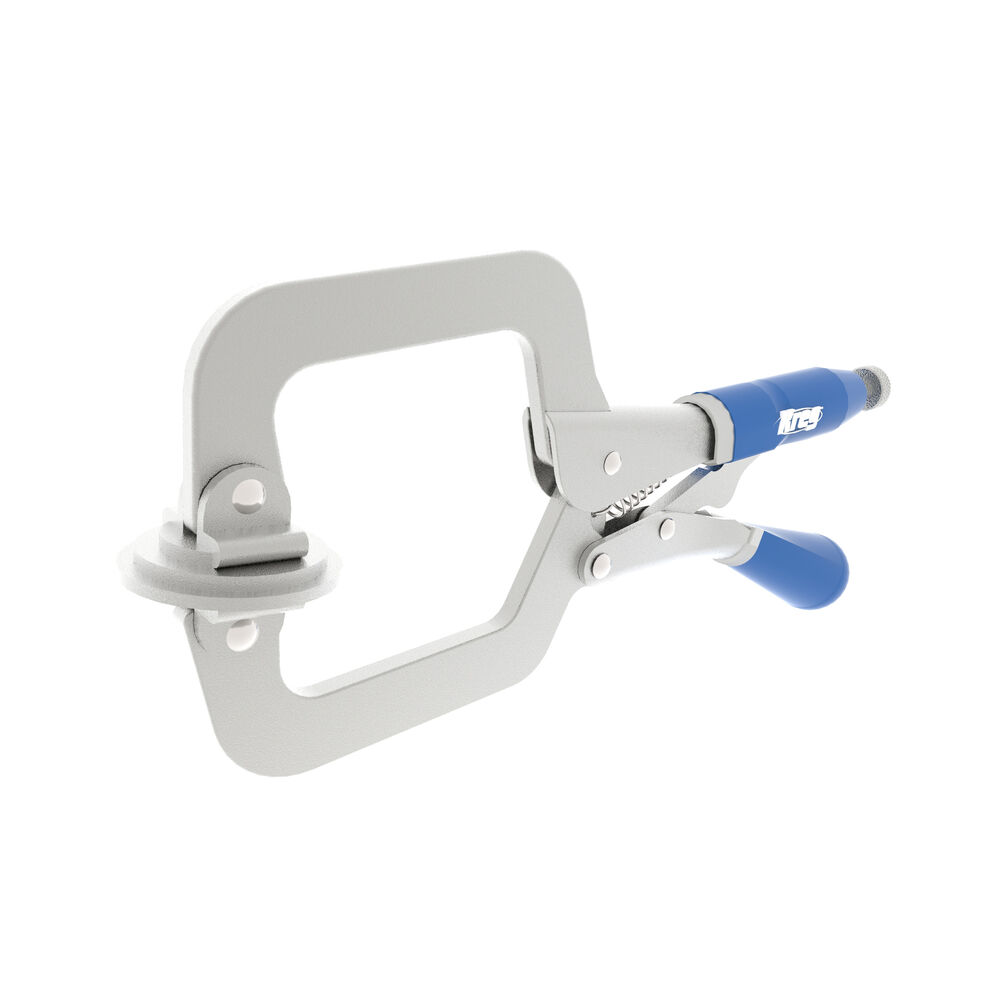 Kreg Classic 3-inch Face Clamp |
|---|---|---|---|---|
| Opening / capacity | 6 in | 12 in | 6 in | 2¾ in material |
| Reach | 2 7/16 in throat | 2 7/16 in throat | Check required reach | 3 in reach |
| Useful distinction | Short trigger clamp | Longer opening, same throat | Four holding points per pack | Broad face pads |
Draw the clamping point before choosing the bar
On a quick sketch, mark the two pad positions and the edge the clamp must reach around. Add a dimension across the material stack and another from the edge to the pressure point. That separates a jaw-opening problem from a throat-depth problem before a longer clamp looks like the obvious answer.
Include protective packing, supports and the space needed for the trigger. A dry arrangement can reveal that the jaws fit but the handle sits against the bench or another clamp. Change the arrangement before the assembly becomes time-sensitive.
- Measure the complete gap between pads.
- Measure inward reach separately.
- Check bar, trigger and release access in the intended position.
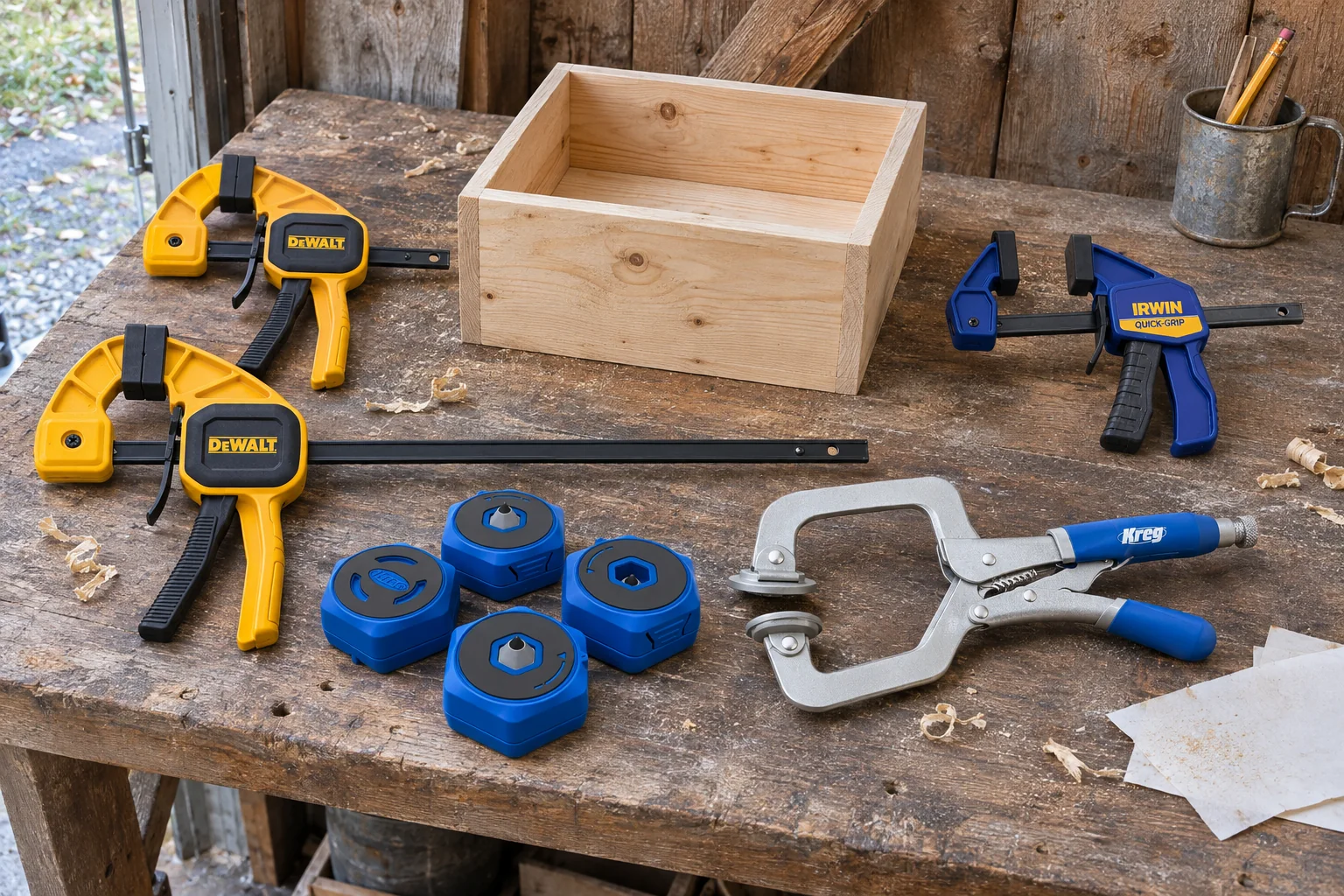
Two measurements, two problems
The big number on a bar clamp usually tells you how far the jaws open. It tells you very little about whether the pad can get to the middle of your work. A twelve-inch clamp may open twice as far as a six-inch one and still have exactly the same reach from the edge. The two DEWALT medium clamps here are a useful example.
Measure the thickness or width that must sit between the pads. Then measure from the nearest accessible edge to the spot where you need pressure. Keep those numbers separate on your shopping note. Calling both of them “size” is where the wrong clamp tends to enter the basket.
Count the packing as part of the opening
Suppose two pieces make a 4½-inch stack. Add a quarter-inch protective pad on each outside face and the clamp must open at least five inches. A nominal six-inch opening has room on paper; a clamp that only opens 4½ inches does not. Leave working room so the jaws can pass over the stack without scraping it.
If the joint sits three inches in from the edge, neither of these 2 7/16-inch-throat DEWALT models reaches its centre. Buying the twelve-inch bar does not fix that. The Kreg face clamp has a three-inch reach, but its separate 2¾-inch thickness limit still has to suit the stack.
One large clamp or several small ones?
A four-pack of IRWIN mini clamps gives you more places to hold a small assembly. That can matter more than having one long bar. Lay out the dry assembly and notice which corners move when you touch the next one; those are the positions to plan for.
Do not interpret the number of clamps as permission to squeeze a joint harder. The useful question is whether the pads keep the intended faces in position while leaving the joint and your hands accessible.
Write this on the cut list
A short buying note is enough to prevent most size mistakes. It also makes comparison shopping much easier because you can ignore features that do not solve the fit problem.
- Required opening, including pads or sacrificial blocks.
- Required reach from the closest usable edge.
- Space below the bench edge for the handle.
- Number of positions that must be held at the same time.
- Whether the clamp must stay in place while another operation reaches the joint.
Sources
- DEWALT 6-inch Medium Trigger Clamp (DWHT83139)Checked November 15, 2026
- DEWALT 12-inch Medium Trigger Clamp (DWHT83140)Checked November 15, 2026
- IRWIN 6-inch Mini clamps, four-pack (1964758)Checked November 15, 2026
- Kreg Classic 3-inch Face Clamp (KHC-PREMIUM)Checked November 15, 2026